
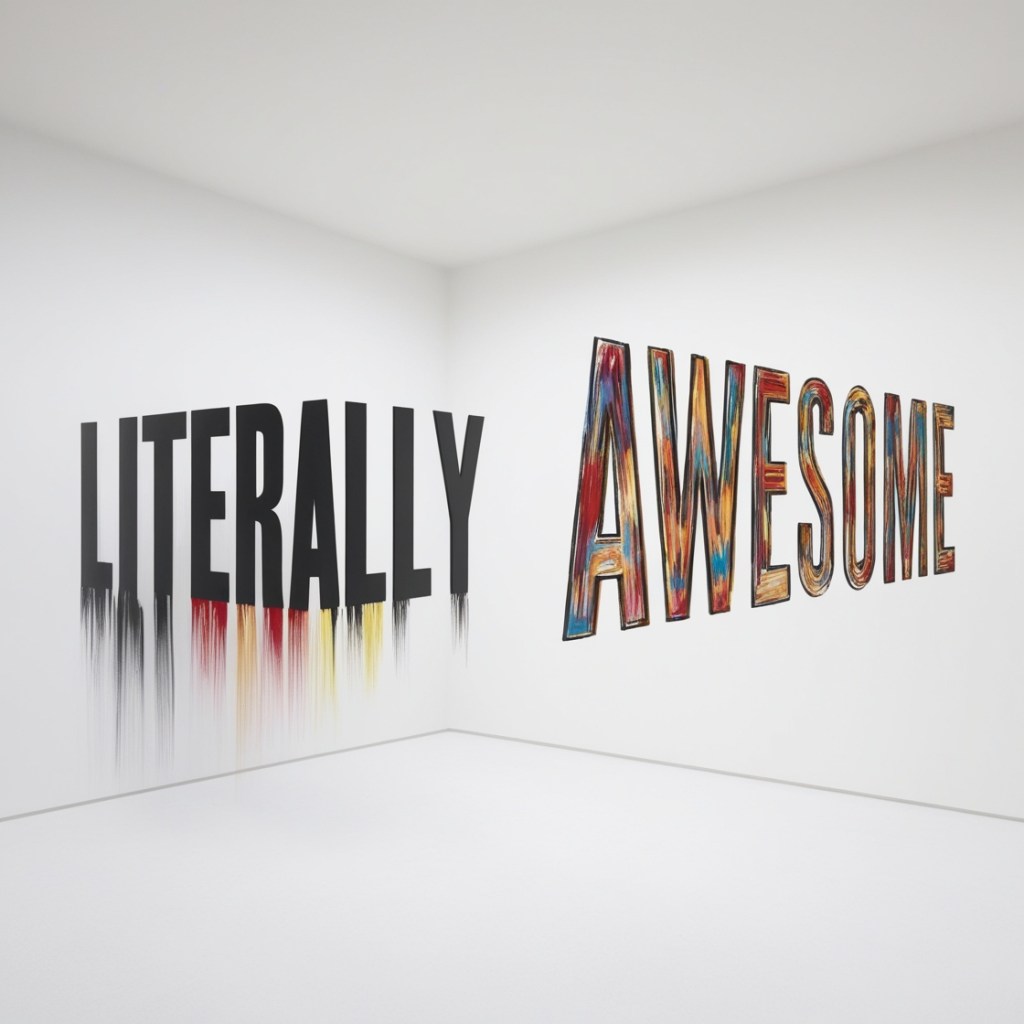
Words are dying. Right now. As you read this. They’re gasping their last breaths, choked by overuse, strangled by repetition. We’re killing them, you and I. With every thoughtless utterance, every careless text, we drive another nail into their coffins.
But which words are we murdering most efficiently? Which ones have we beaten into meaninglessness, their corpses still twitching on our tongues?
Let’s perform a linguistic autopsy. Brace yourself. It’s not pretty.
- Literally
It’s everywhere. A virus in our speech. “I’m literally dying,” they say. But they’re not. They’re alive, breathing, hearts beating. The word has become a lie we tell ourselves. A way to make the ordinary seem special. But it’s not special. It’s just noise.
- Awesome
Once, it meant something. Gods were awesome. Monsters were awesome. Now? A sandwich is awesome. A tweet is awesome. We’ve drained the word of power. It’s a husk, a shell of what it was. We use it to prop up the mundane, but it can’t bear the weight.
- Literally (Again)
We say it twice because once isn’t enough. We hope that if we repeat it, meaning will appear. But it doesn’t work that way. Each repetition kills the word a little more. It’s a desperate cry for attention in a world that’s stopped listening.
The Twist:
But here’s the thing. These overused words are doing something.
“Literally” isn’t dying. It’s evolving at light speed. It’s no longer about facts—it’s a primal scream in a world drowning in noise. When someone says they’re “literally dying,” they’re begging you to feel what they feel, to see what they see. It’s emotion weaponized into language.
“Awesome” isn’t weak. It’s a shapeshifter. It made the extraordinary ordinary and the ordinary extraordinary.
So go ahead. Use “literally” when you mean “figuratively.” Call everything “awesome.”
You’re literally, awesomely changing the world. One abused word at a time.


 S.J. Asher
Leave a reply to S.J Asher Cancel reply